
How Does AI Document Verification Work Inside a CDL Driver Onboarding App?
- Jonathan Vogt
- Jun 5
- 6 min read

Updated: Jun 15
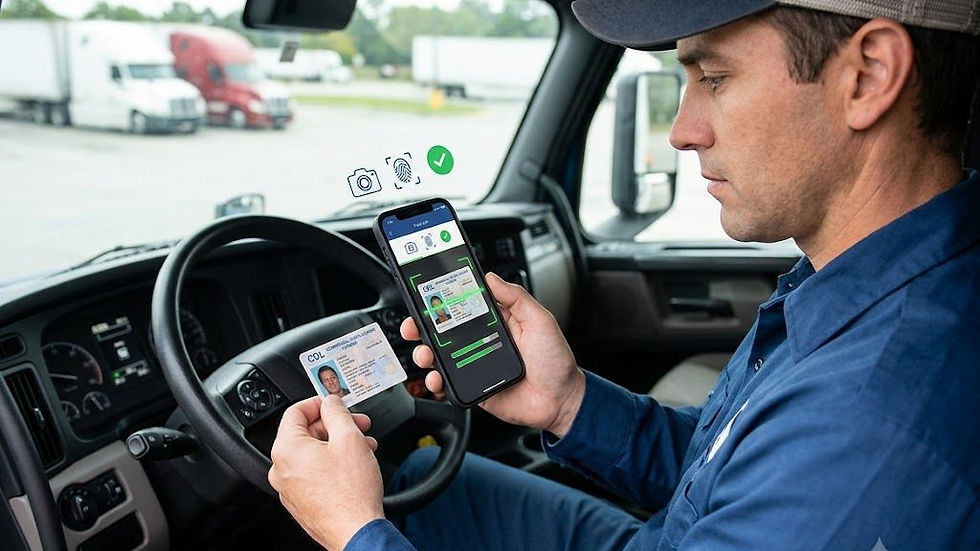
AI document verification changes CDL driver onboarding across the trucking industry, especially when integrated into a CDL driver onboarding app. It uses machine learning to automate checks of required documents, reducing administrative work and strengthening compliance for carriers and drivers. This article explains how the technology operates, details automated DOT compliance checks, outlines the AI-enabled onboarding workflow, and summarises the benefits for the sector. Readers will gain practical insight into how AI improves efficiency and regulatory adherence in CDL onboarding.
What Is AI Document Verification in CDL Driver Onboarding?
AI document verification in CDL onboarding uses artificial intelligence to authenticate and validate required documents submitted by drivers. The technology speeds the process by extracting and verifying data automatically. Machine learning models analyse driver credentials with high accuracy to support regulatory compliance and reduce errors from manual review. The result is faster onboarding and more reliable documentation checks.
How Does AI Scanning Technology Capture Driver Documents?
AI scanning employs advanced imaging and OCR to capture and parse driver documents. Drivers upload files or photos via a mobile app or web portal. The system extracts data from licences, medical certificates, and background-check forms across varied formats and layouts. Extracted data is validated against regulatory requirements and company rules for real-time assessment and error detection. This reduces manual review time and preserves resources. For seamless integration and enhanced driver experience, consider solutions like Ready App.
Which Key Driver Credentials Are Verified by the AI Scanner?
The AI document verification system checks several key credentials to ensure that drivers meet all regulatory standards. The primary documents verified include:
Commercial Driver’s License (CDL): The most crucial document indicating that the driver is authorized to operate a commercial vehicle.
Medical Certification: Ensures that the driver meets health standards mandated by the Federal Motor Carrier Safety Administration (FMCSA).
Background Check Documents: Involves verifying the driver’s employment history and any criminal records.
Automating verification helps ensure DOT compliance and accelerates onboarding.
How Does Automated DOT Compliance Checking Work Within the App?
Automated DOT compliance checking in the onboarding app verifies that submitted documents meet federal and state regulations. The system cross-references credentials against a database of DOT standards to identify compliance gaps. That enables efficient tracking and reporting of regulatory adherence, which supports safety and quality management. Automation also reduces manual inspections and the risk of human error, making onboarding more reliable.
What DOT Standards Are Integrated Into the Compliance Automation?
Within the compliance automation system, various DOT standards are integrated to facilitate thorough checks on submitted documents. Some notable standards include:
49 CFR Part 391: Governs the qualification of drivers, including medical examinations and self-certification requirements.
49 CFR Part 382: Regulations related to drug and alcohol testing for commercial drivers.
FMCSA's Safety Performance History: Mandates the review of previous safety records to ensure that drivers adhere to safety policies.
Embedding these standards ensures drivers are evaluated against current regulatory requirements.
How Does AI Detect Incomplete or Fraudulent Driver Documents?
AI uses algorithms to detect incomplete or fraudulent documents by analysing image quality, document structure, and embedded security features. The system flags alterations or inconsistencies—such as mismatched data between an image and backend records—for further review. This proactive detection reduces the risk of unauthorised drivers and supports stronger compliance controls.
What Are the Steps in the Digital CDL Driver Onboarding Workflow Using AI?
The AI-powered digital onboarding workflow includes these steps:
Document Submission: Drivers upload required documents via a mobile app.
AI Verification: The system automatically scans and validates documents against regulatory standards.
Database Entry: Validated information is entered into the company’s database for record-keeping.
Compliance Check: The app performs automated DOT compliance checks, ensuring all credentials meet standards.
Automating these steps can shorten onboarding from weeks to days and improve operational efficiency. To learn more about how these processes are managed, you can explore Ready App's carrier solutions.
How Do Drivers Submit Documents Through the Mobile App?
To submit documents, drivers follow a straightforward process:
User Registration: Drivers create an account using their basic information.
Document Upload: Users can take photos or upload files of required documents directly from their devices.
Confirmation: The app provides immediate feedback on submission status, indicating any missing documents or necessary corrections.
The interface simplifies submission, reduces friction, and improves engagement.
How Are Documents Processed and Approved by Carriers Automatically?
After submission, the AI processes and approves documents per predefined criteria. The system records verification time and clearance, freeing carriers to focus on strategic tasks. Validations trigger notifications to drivers and administrators so all parties know onboarding status. This automation accelerates onboarding and reduces the risk of human oversight.
What Benefits Does AI-Powered Verification Provide to Truck Drivers and Carriers?
AI-powered verification delivers measurable benefits for drivers and carriers.
Increased Speed: Automating document checks dramatically reduces the onboarding time.
Improved Accuracy: AI minimizes human error in the verification process, improving data integrity.
Enhanced Compliance: Continuous monitoring and updates ensure adherence to current regulations.
How Does AI Reduce Errors and Accelerate Hiring Time?
AI reduces errors by validating data consistently across multiple sources. Studies report significant reductions in hiring time for companies using AI, though exact figures vary with company size and existing processes. Faster onboarding helps fill driver positions more quickly, which is important given industry turnover.
Integrating AI into onboarding is essential for companies that want to remain competitive. Understanding industry complexities and how technology can optimize operations is critical, and platforms like Ready App support these needs.
What Security Measures Protect Driver Data Within the App?
To ensure the security of driver data, the app implements several robust measures. Key protocols include:
Data Encryption: Protects sensitive information during transmission and storage.
Access Control: Restricts data access to authorized personnel only, reducing risk of breaches.
Regular Security Audits: Conducts periodic reviews and updates of security protocols to ensure compliance with industry standards.
These measures secure driver documents, strengthen user trust, and support regulatory compliance.
What Are Common Questions About AI Document Verification and CDL Onboarding?
Stakeholders commonly ask about best practices, implementation, and data security. These FAQs clarify the benefits and operational requirements for integrating AI into onboarding so parties can prepare for the transition.
How Accurate Is AI Driver Document Verification in the Trucking Industry?
AI verification systems report accuracy levels often above 95%, achieved through continuous machine learning that improves performance over time. Compared with manual methods, AI reduces discrepancies and increases reliability in the onboarding process. Both carriers and drivers benefit from the greater confidence that comes with higher verification accuracy.
Which Documents Are Mandatory for Automated CDL Driver Onboarding?
When onboarding drivers, several key documents are required to ensure compliance with DOT regulations. These include:
Commercial Driver’s License: Proof of the driver’s qualifications to operate commercial vehicles.
Medical Examination Certificate: Verification that the driver meets health standards required by federal law.
Proof of Employment History: Documentation of previous employment in the trucking industry.
Background Check Results: Information on any criminal history affecting the driver’s eligibility.
These documents are pivotal to safety and compliance, ensuring a thorough onboarding process.
Frequently Asked Questions
How does AI document verification improve compliance in trucking?
AI automates validation of driver credentials against federal and state rules, reducing human error and enabling real-time authenticity checks. Ensuring documents meet standards lowers the risk of penalties and promotes safer, more compliant operations.
What challenges do carriers face when implementing AI document verification?
Challenges include integrating AI with legacy systems, staff training, and protecting data privacy. Upfront technology and infrastructure costs can also be barriers. Overcoming these requires strategic planning, dedicated resources, and attention to user adoption.
Can AI document verification be customized for different trucking companies?
Yes. AI document verification can be customized to match company size, regulatory requirements, and specific onboarding workflows. Customizable systems let carriers align verification with operational practices and compliance needs.
Are there limitations to using AI for document verification?
AI offers clear advantages but has limitations. Poor-quality scans or uncommon document formats can challenge the system, and ambiguous cases may still require human review. A hybrid approach combining automation with manual oversight is often most effective.
How can companies assess the ROI of AI document verification?
Assess ROI by measuring time saved, reductions in hiring errors, improved compliance rates, and lower administrative costs. Regular analysis provides financial and operational insight to support investment decisions.
What future trends should we expect in AI document verification for trucking?
Expect advances in machine learning to improve accuracy and efficiency, greater integration with technologies such as blockchain for enhanced security and transparency, and faster adaptation to changing regulations to keep onboarding compliant and efficient.
Conclusion
AI document verification reduces onboarding time and strengthens regulatory compliance. It streamlines document checks and lowers human error, improving data integrity. For carriers seeking operational efficiency, integrating AI solutions is a necessary step. Discover how our platform can help you optimize your onboarding processes today.


Comments